Embarking on a tent camping adventure is incredibly exciting! However, keep in mind, shops might not always be close to your campsite. The proper preparation is key for camping in the vast wilderness. If you’re a first-time tent camper, figuring out what to bring can feel overwhelming.
Don’t worry! In this post, I’ve put together a comprehensive packing list to make your tent camping experience both comfortable and enjoyable. Read through this guide to avoid forgetting anything and to make the most of your time in nature.
Disclosure: I only recommend products I am using myself and all opinions expressed here are my own. The following links below may be affiliated with programs such as Amazon where I may earn a small commission for clicks on the links, at no additional cost to you.
Must-Have: Tent Gear
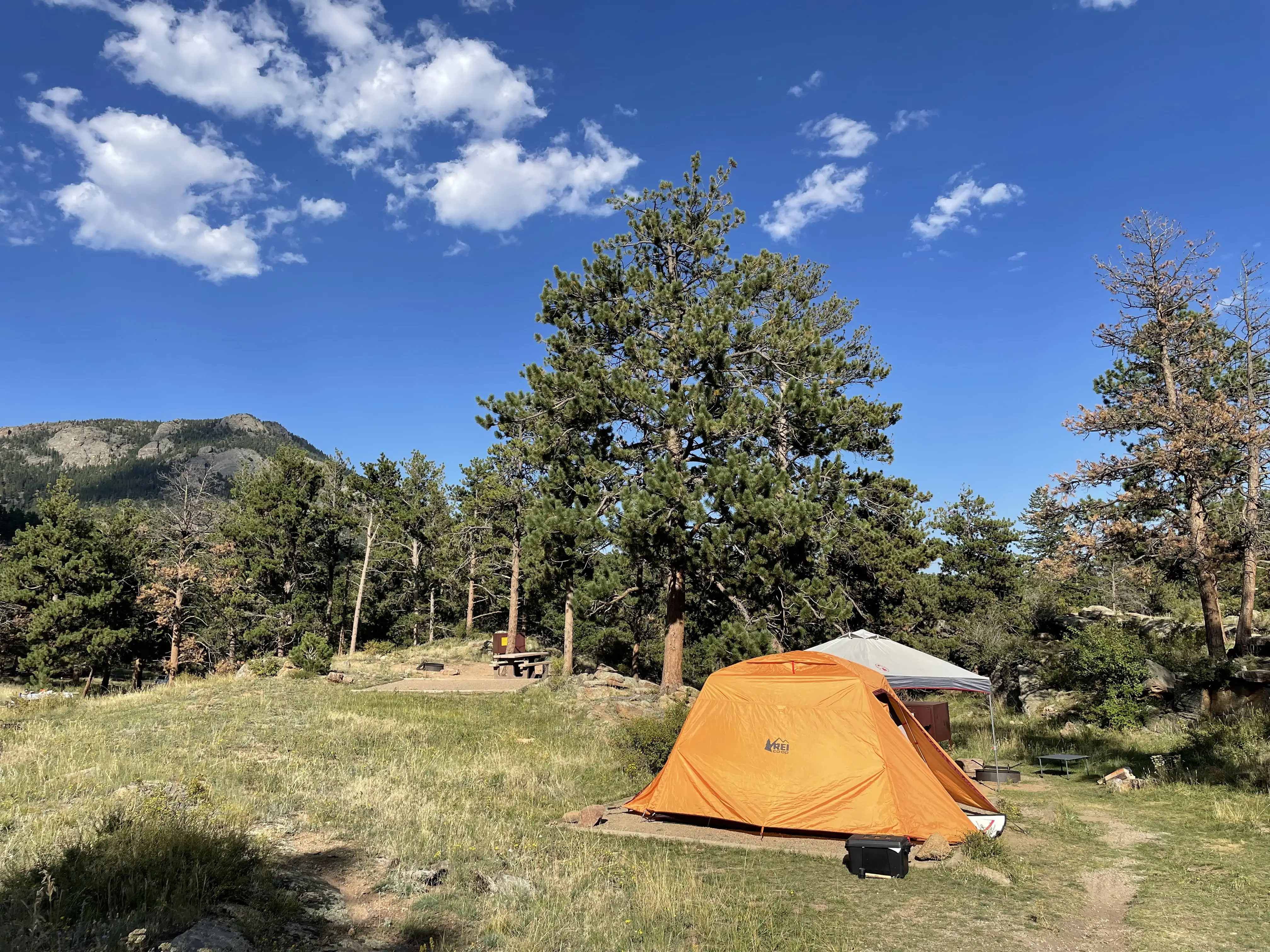
Tent: Don’t forget your tent; without it, you’ll be sleeping outside or in your car.
Footprint: Put this under your tent to keep out ground moisture and cold.
Stakes: These are essential for keeping your tent secure against rain and wind.
Mallet: Use this to firmly drive the stakes into the ground.
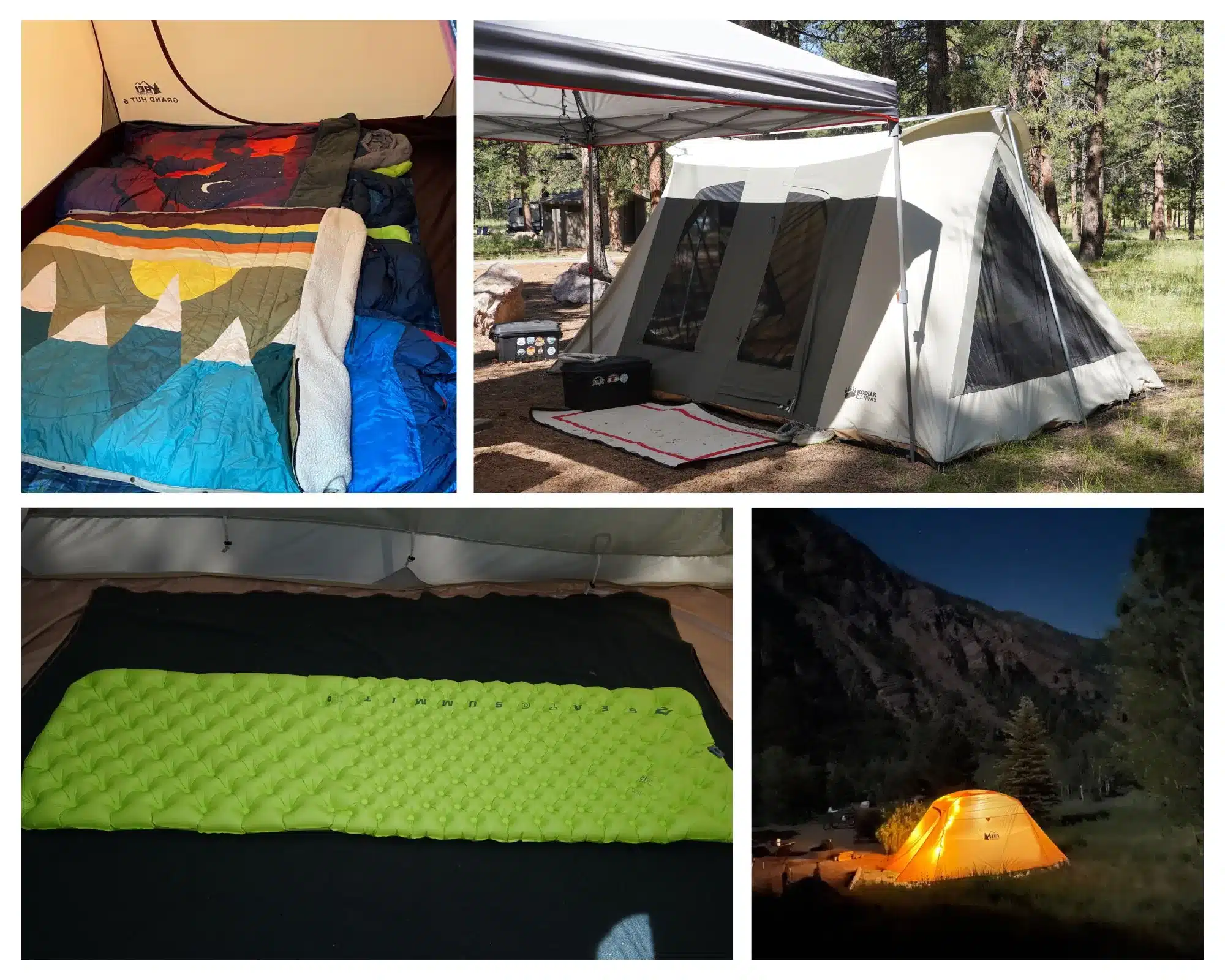
Sleeping Bag: Sleeping bags offer superior insulation, especially during chilly nights.
Sleeping Pad, Air Mattress, or Cots: Place one under your sleeping bag to minimize moisture, cold, and the discomfort of bumps in the ground beneath the tent.
Camping Pillow: If you’re used to sleeping with a pillow, bring one to sleep more comfortably while camping.
Tent Lantern: Essential for lighting up your tent after sunset, as it gets very dark at the campsite.
This list above includes not only the tent itself but also the items needed for setting it up, as well as the essentials for use around and inside the tent.
Other Useful Tent Accessories / Nice to Have for Tent Gear
Tent Rug: A mat or blanket to place inside your tent. While not essential, it can add warmth and comfort, making your sleeping experience more pleasant.
Sleeping Bag Liner: A thin liner used inside your sleeping bag. It adds extra warmth and is easy to wash, helping to keep your sleeping bag clean.
Blankets: Extra blankets can give you some added warmth and comfort when it gets chilly at night.
Electric pump: This makes inflating your sleeping pad or air mattress much easier. While manual inflation is possible, it requires significant lung capacity (especially challenging at high altitudes!), so an electric pump saves time and effort.
Outside Camping Mat: Placing a mat at the entrance of your tent helps keep dirt and dust out.
String Lights: These can light up your tent and make it easier to find in the dark.
Rope: It’s handy for emergencies, like when the ropes of your tent or canopy break. You can also use it to hang laundry.
Batteries: While rechargeable headlamps are becoming more common, having extra batteries is always handy.
Mini Dust Pan: Useful for cleaning the inside of your tent.
The items above are what our family has gradually collected with each camping trip. Of course, you can still enjoy camping without all of them.
For storage tips, we keep our tent gear in storage bins from Home Depot. This way, we don’t have to repack everything for each trip, and it helps to minimize the chance of forgotten items.
Must-Have cooking supplies
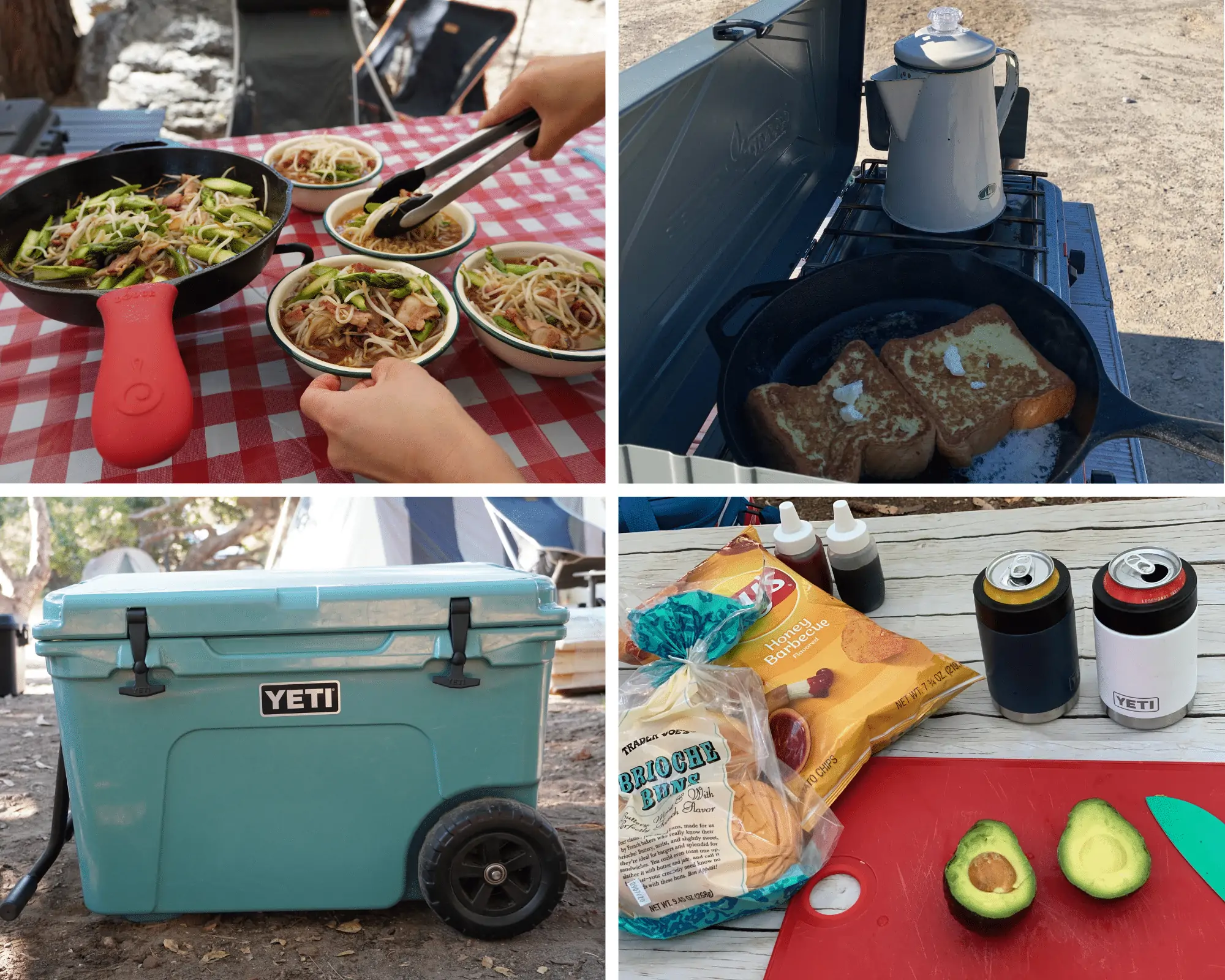
Camping Stove: A must-have for cooking at the campsite. While you can cook over a campfire, it often takes longer, so a camping stove is recommended.
Propane: Necessary for the camping stove. Make sure not to forget it, or you’ll be stuck without a way to cook! *Shop at local grocery stores, Walmart, or Target for cheaper prices!
Pots &Frying Pans: Essential for camping cooking. If you have either one, you’ll be fine.
Kettle: Handy for making coffee, tea, or instant noodles.
Spatulaand Tongs: Useful for flipping and handling food.
Trivet: Protects the picnic table or your camping table from hot pots and pans.
Dishes: Plates, bowls, utensils, chopsticks, and mugs for serving and eating your meals.
Food: Bring your own food to cook, or check out local shops around the campsite for supplies.
Favorite Condiments: Bring along any other condiments you like.
Water: Even though many campsites have water, the water is not always safe for drinking. Make sure to bring your own drinking water.
Coffee & Tea: Perfect for starting your morning or relaxing in the evening.
These are the kitchen items you’ll need when cooking from scratch while camping. If you prepare and cut the ingredients at home, you won’t need a knife and a cutting board. Additionally, you can start with paper plates instead of actual plates and bowls.
Nice to Have: Cooking Supplies
Plastic Wrap: Useful for wrapping sandwiches for your excursions or storing leftover food.
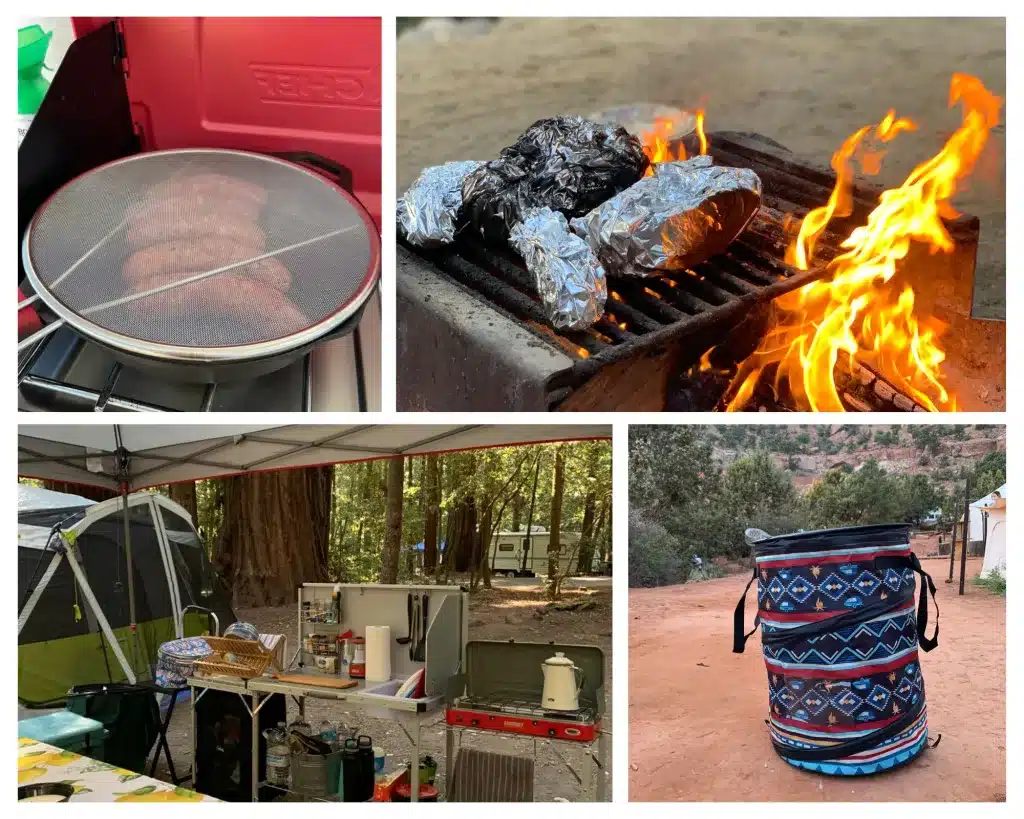
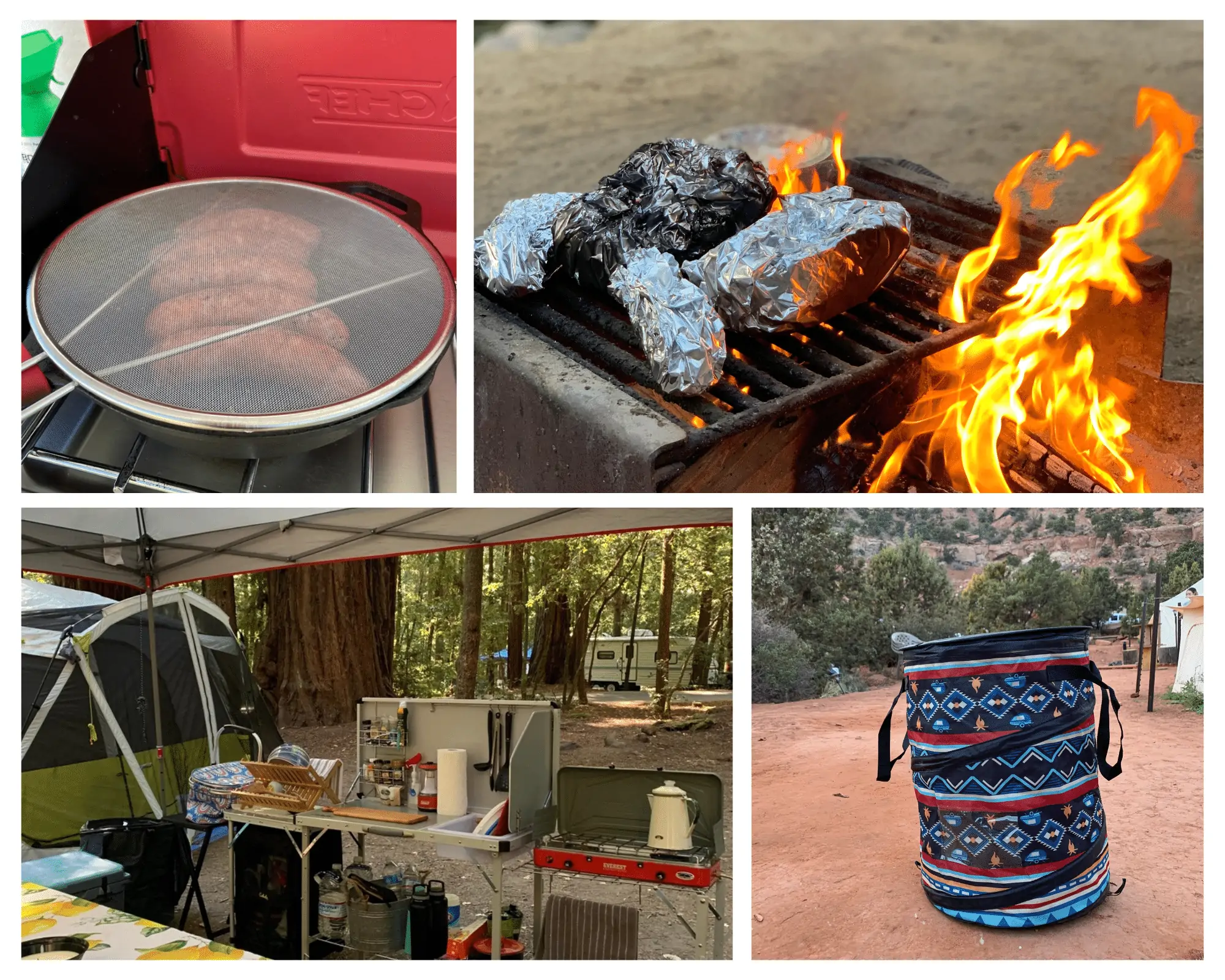
Tin Foil: Great for grilling items like potatoes on the BBQ.
Ziploc Bags: Handy for storing leftovers, snacks, or even little treasures found by kids.
Kitchen Bowl & Strainer: Useful for washing fruits and vegetables, draining water, or even as an extra dish. We use collapsible bowls and strainers.
Splatter Screen: Prevents burns from oil splatters and keeps bugs out of your food while cooking.
Kitchen Scissors: Convenient for cutting food without needing a knife.
Can Opener/Bottle Opener: Essential for opening cans and bottles, especially since many American cans require a can opener.
Dish Dring Rack: Helps dishes dry faster, even while camping.
Trash Can: A collapsible trash bin can be very handy at the campsite.
Water Jug: Necessary for washing hands and dishes at your campsite.
Paper Plates: Useful in case you forget your regular plates or for various other uses.
S’more Sticks: Essential for making s’mores over the campfire.
French Press: A must-have for coffee lovers. This compact and easy-to-use French press is our favorite.
Tablecloth: Since campsite tables aren’t always clean, a tablecloth is a good idea.
Camp Kitchen: While a camp kitchen keeps things organized and easy to use, it can take up a lot of space, so it’s not necessary for short trips.
Mesh Food Cover: Great for covering your food on the picnic table to keep all the bugs out of your food.
Lantern: At night, having a lantern on the table makes it brighter and adds to the ambiance.
These kitchen items listed above are also great to have! They’re not essential, but they do make camping more fun. Just like our tent gear, we’ve gradually bought and replaced them over time.
Storage Tips: We keep our cooking items in a separate box from our tent gear except food and spices. We swap out smaller items like dishes depending on what meals we plan for each camping trip.
Campfire gear
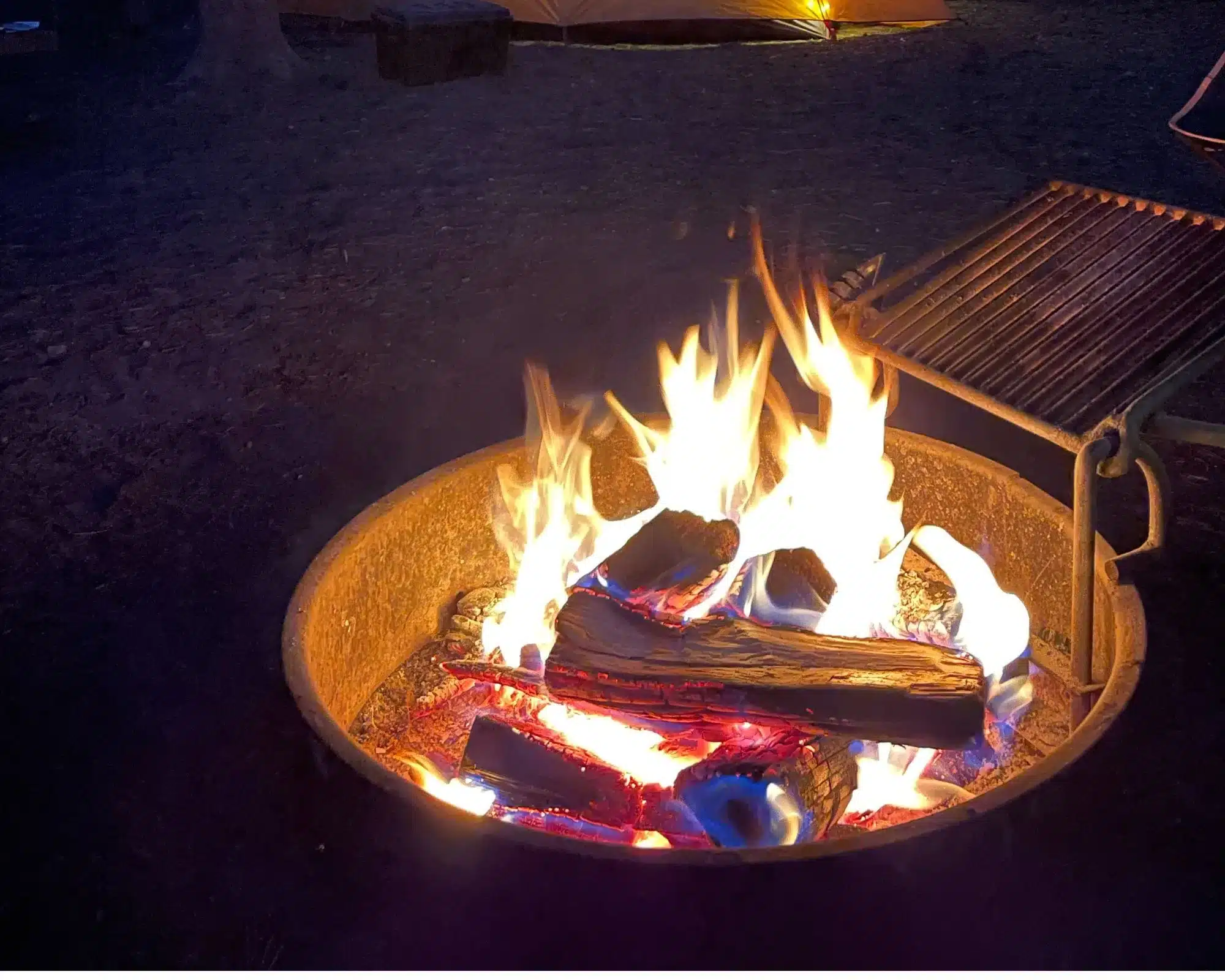
Firewood: Firewood can carry pests and insect eggs, so to protect local ecosystems, it’s best to buy firewood locally.
Saw: Useful for cutting firewood if it’s too large.
Fire Starters: Since firewood can be difficult to ignite on its own, fire starters help get your campfire going.
Campfire Tongs: These tongs are longer and useful for handling firewood safely.
Heat-Resistant Gloves: Wear these to protect your hands from burns while handling hot items.
We store our campfire gear, except for firewood, in the tent gear box. Most campgrounds in the U.S. have fire rings, so you usually don’t need to bring a fire pit. However, some places might not have them, please check each campground’s official website.
To protect the natural environment of the campground, it’s best to buy firewood locally.
Other Essentials
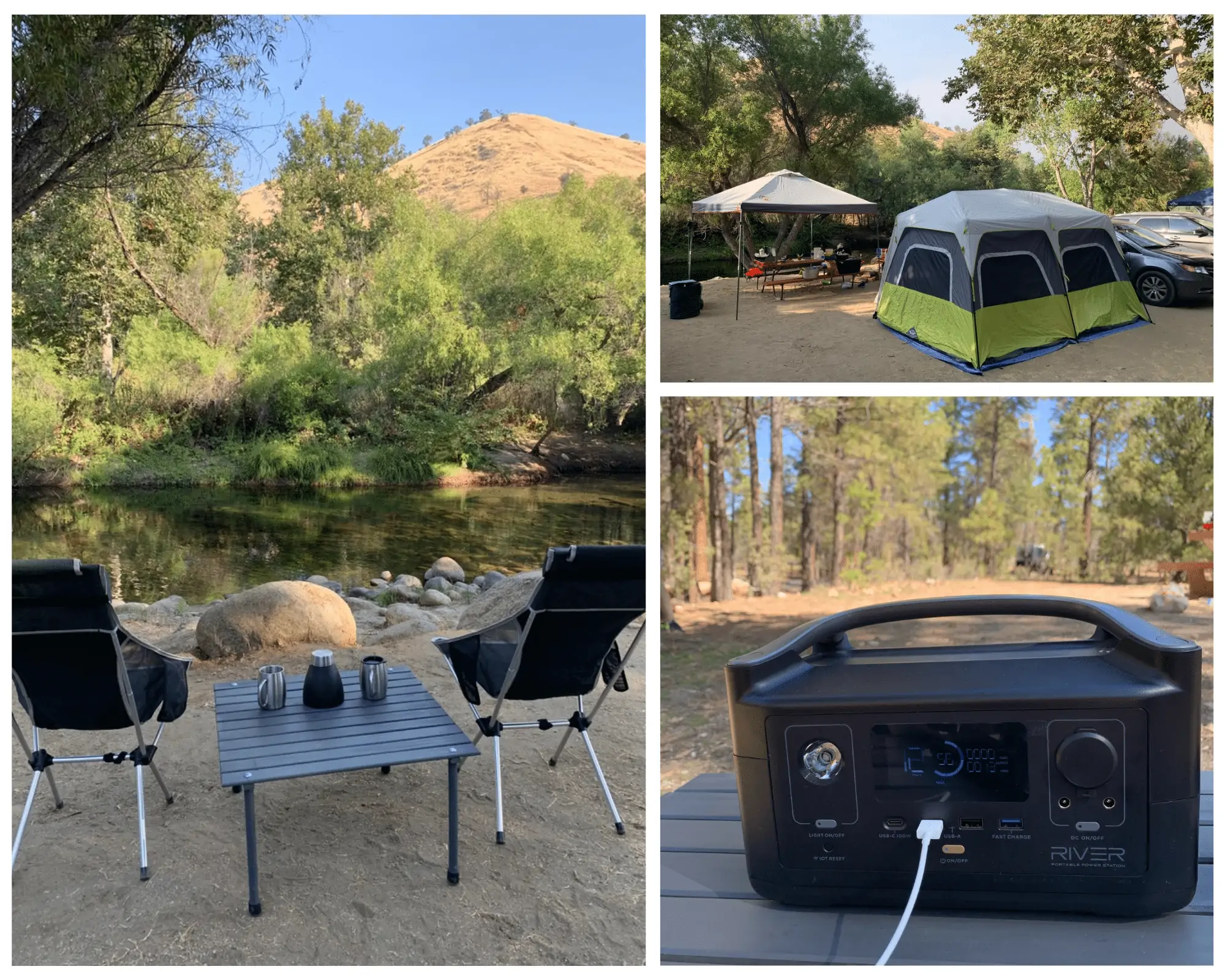
Canopy or Tarp: Useful for campsites without shade or on rainy days. For beginners, canopies are easier to set up than tarps and recommended. You can also use the canopy poles as a makeshift clothesline.
Camping Chair: While many campsites have picnic tables, a camping chair allows you to sit anywhere comfortably.
Headlamp: Campsites get very dark at night. A headlamp or flashlight is essential for finding your way, especially to the bathroom.
Wagon: Convenient for transporting gear from the car to the campsite or for carrying small children.
The lists above are some additional items that can be handy to bring on your camping trips. The need for these items may vary based on the campground location and the amenities available.
Personal Items
Clothing: Dress according to the weather. Temperatures can drop significantly in the morning and evening, so wearing layers is best.
Medicine: Don’t forget your regular medications and supplements.
First Aid Kit: Includes band-aids, antiseptic spray, etc. This is crucial, especially for families with children, as minor cuts and scrapes are common at campsites.
Cash: While most places now accept credit cards and electronic payments, there are still some places where cash is needed. So, be sure to bring some cash with you.
Cell Phone & Charger: Taking photos and videos while camping can quickly drain your battery.
When you’re focused on packing all your camping gear, it’s easy to forget personal items. Hope this list helps you remember everything you need.
Leisure Camping Supplies
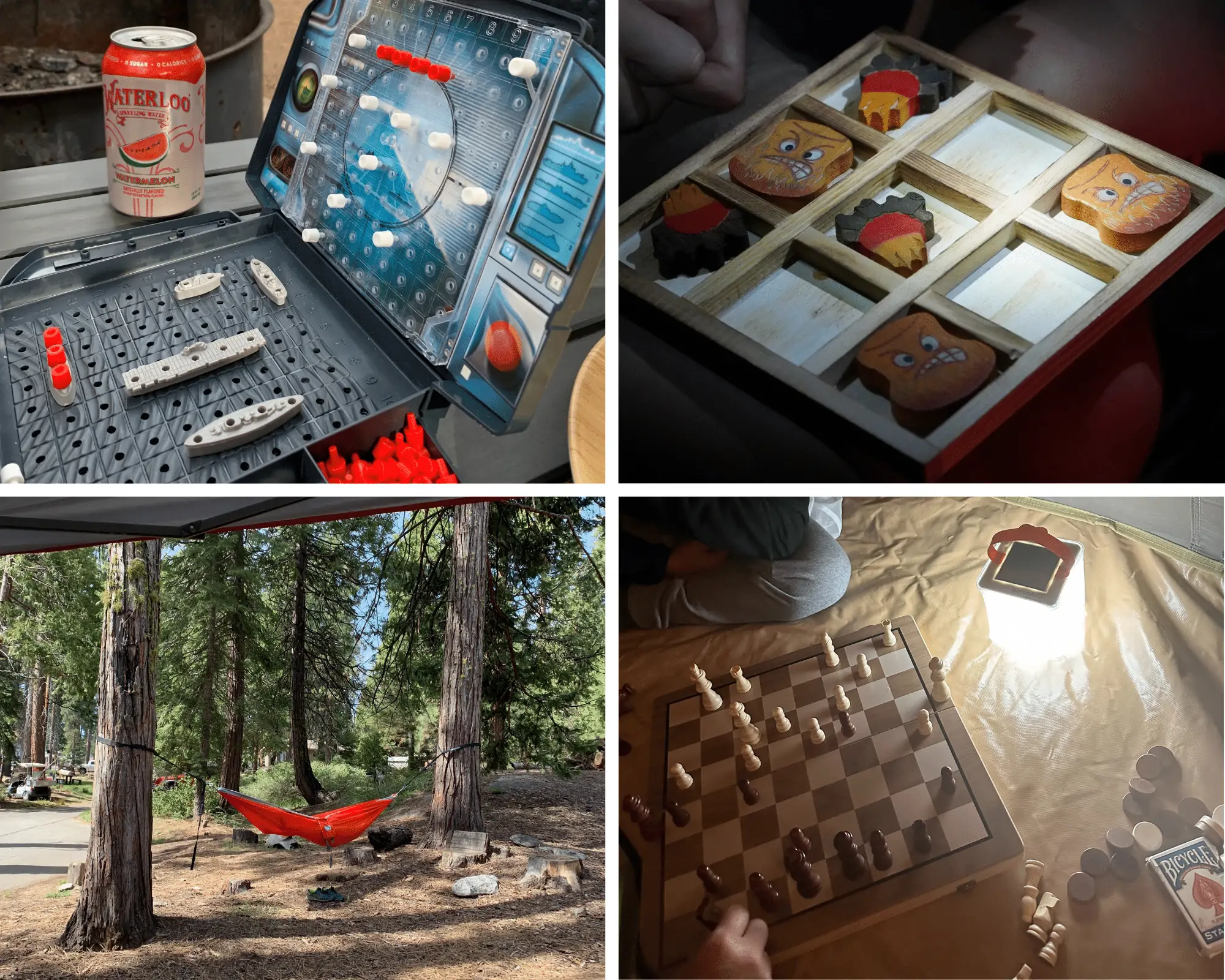
Hammock: Perfect for campsites with trees, providing a relaxing place to lounge.
Frisbee: Glow-in-the-dark options are fun even after dusk. Just be mindful of your surroundings while playing.
Bicycles: Ideal for riding around the campsite or nearby trails.
Playing Cards: A classic and versatile entertainment option.
Portable Speaker: A speaker is a great item to bring to a campsite, whether you want to liven things up with some music or relax during your downtime.
Binoculars: You may encounter animals and birds at your campsite. Binoculars are an essential item for enhancing your wildlife observation experience.
Books or Kindles: Perfect for relaxing and unwinding during downtime.
Camping isn’t just about cooking and making s’mores; it’s also about enjoying being nature, playing and relaxing! Bringing along some entertainment items can make your camping experience even more fun.
FINAL THOUGHTS
This camping list includes all the details, but for items like kitchen supplies, you can simply bring what you use at home. It’s best to start camping with what you already have. Your packing list will vary depending on the location, season, frequency, and your personal camping style. Trying to get everything all at once can cost more and be exhausting. As you gain more experience, you can gradually add to your camping gear and enjoy camping in your own style.
If you have any questions or useful items and tips to share, please feel free to leave them in the comments below. I hope you will have a great camping experience and make more memories!!
Hi! I’m Tomo, a family travel and camping blogger. Welcome to my adventure blog, Tomo Travel & Camping! Living in Colorado with my family, we love exploring the great outdoors. Let’s discover new experiences together!
This site includes affiliate links to retailers like Amazon.com. When you use these links to make a purchase, I earn a small commission at no extra cost to you. I appreciate your support!